Fresh loaves ready for pick up every Friday

Open Baking vs. Dutch Oven Baking Sourdough Bread
Open Baking vs. Dutch Oven Baking: The Complete Guide to Sourdough Bread
Kate
2/2/20264 min read


When it comes to baking sourdough, one of the biggest decisions you’ll make is how to bake it:
Open on a baking stone or steel, or inside a Dutch oven/closed vessel. Both methods can create beautiful artisan loaves, but they behave very differently—and understanding those differences helps you choose the best method for your kitchen.
Below is a complete guide to each technique, the science behind them, and practical ways to add steam for that coveted blistered crust.
Why Steam Matters in Sourdough Baking
Steam is the secret to:
• A glossy, blistered crust
• Maximum oven spring
• A thinner, more delicate crust early in the bake
• Better caramelization later in the bake
Without steam, the crust sets too quickly and prevents the loaf from expanding fully.
Baking in a Dutch Oven (Closed Baking)
Dutch ovens are beloved in the sourdough world for one simple reason:
they trap steam naturally.
How It Works
When your dough hits the hot pot, the moisture inside the dough evaporates and fills the enclosed space. This creates a mini steam chamber—no extra equipment needed.
Benefits
• Consistent, reliable oven spring
• Beautifully blistered crust
• Beginner‑friendly
• Works in any home oven
Drawbacks
• Size limitations (boules only, unless you have an oval DO)
• Heavier and harder to maneuver
• Can over‑brown the bottom crust
Amazon sells a reasonable dutch oven if this option is your preference. This double dutch oven for small round bread is a great. Think bread bowls for soup or dips. In the past I tried adding two small loaves to one Dutch oven...the shapes were comical! When handling Dutch ovens they can retain a crazy amount of heat. I purchased these gloves and they have saved the skin on my hands and arms. You won't regret it!
Open Baking (Baking Stone or Baking Steel)
Open baking is the method used in professional bakeries. It gives you more control and can produce exceptional results—but it requires intentional steam.
How It Works
You bake the loaf directly on a baking stone or baking steel, which stores heat and transfers it quickly to the dough. Steam must be added manually.
Benefits
• Superior bottom crust
• More even browning
• Ability to bake multiple loaves at once
• Works for boules, batards, baguettes, and more
Drawbacks
• Requires steam‑generation tools
• More variables to manage
• Less forgiving for beginners
How to Add Steam When Open Baking
If you choose open baking, you’ll need to create steam manually. Here are the most effective methods:
1. Lava Rocks + Steam Pan Method
This is the closest you’ll get to a professional steam‑injected oven.
How to Do It
1. Place a metal pan on the bottom rack.
2. Fill it with these lava rocks (they hold heat and release steam slowly).
3. Preheat the oven with the rocks inside.
4. When you load your dough, pour 1–2 cups of boiling water over the rocks. Be very careful not to drip any water on the oven door glass. Some will place a kitchen towel over the area to offer extra protection.
5. Close the oven quickly to trap the steam.
You will need: Lava rocks, stainless steel steam pan and an electric kettle. Learn from my mistake, make sure you wash the lava rocks first!
2. Ice Cube Method
A simpler, hands‑off option.
How to Do It
1. Place a cast iron skillet or metal pan on the bottom rack.
2. Add a handful of ice cubes right after loading your dough.
3. The slow melt creates a longer steam release.
You will need: Cast iron skillet or heavy-duty metal pan. Cast iron can be expensive. This one hits at a great price and works wonderfully. Cast Iron 12 inch. Make sure you have oven safe gloves like these (Lanon heat and cold resistant silicone gloves)
3. Spray Bottle Method
This method is less effective alone but great as a supplement.
How to Do It
1. Load your dough.
2. Spray the oven walls with water, I use this sprayer (avoid the glass door).
3. Repeat 2–3 times during the first 5 minutes.
You will need: High‑quality food‑safe spray bottle (this is a reasonable option; I have one for both oil and water). If you want a fancy option, this electric spray bottle is fantastic. Bonus it is rechargeable. I find it useful for baking and my plants.
4. Inverted Roasting Pan Method
A hybrid between open baking and Dutch oven baking.
How to Do It
1. Place your dough on a baking steel or stone.
2. Cover it with a large inverted roasting pan or stainless-steel bowl.
3. Remove the cover halfway through the bake.
This traps steam from the dough itself—just like a Dutch oven—but gives you the benefits of open baking.
You will need: Stainless steel bowl or this roasting pan. Two loaf pans will also do the trick. I use the loaf pans for sandwich loaves
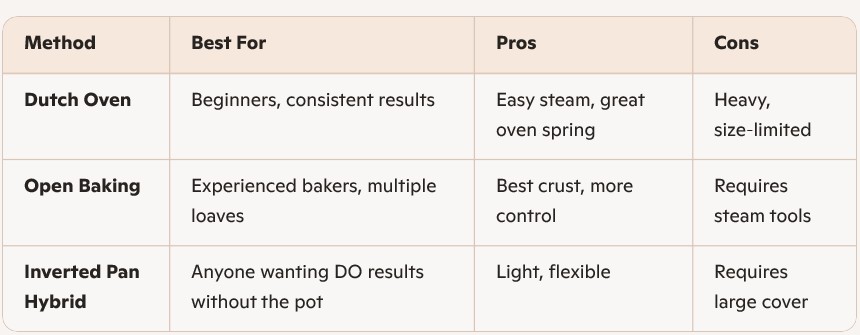
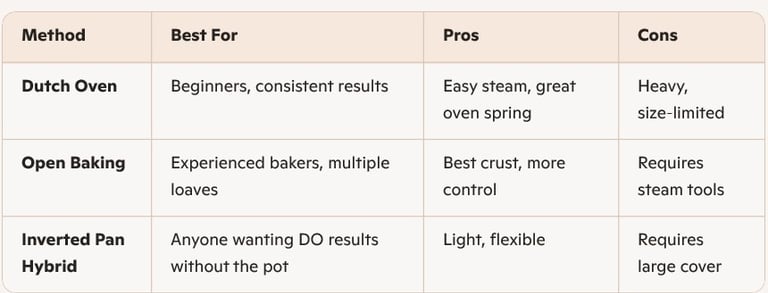
Which Method Should You Choose?
Here’s a quick comparison to help you decide:
My Recommended Setup for Home Bakers
If you want the best of both worlds:
1. Start with a Dutch oven for reliability. I prefer this one "Dutch Oven" its a great price point.
2. Upgrade to a baking steel once you’re comfortable. This baking steel is beyond amazing. Baking Steel. I use it for bread and pizza.
3. Add a steam system (lava rocks or ice pan) for professional‑level results. These lava rocks are perfect. Black Lava Rocks natural stone
This progression gives you confidence, consistency, and eventually bakery‑quality loaves.
Happy Baking!
Kate's Pasture to Pantry
At our sourdough bakery, we believe great bread begins with simple, honest ingredients.
Food Handler card holder Oregon Cottage Law Compliant
Contact
Newsletter
Katespasturetopantry@gmail.com
503-703-3783
© 2024. All rights reserved.